
E-commerce operations and data governance
E-Shop Operations Expert
An operations workspace turns multiple source files into reproducible product lists, analysis artifacts and governed business rules.
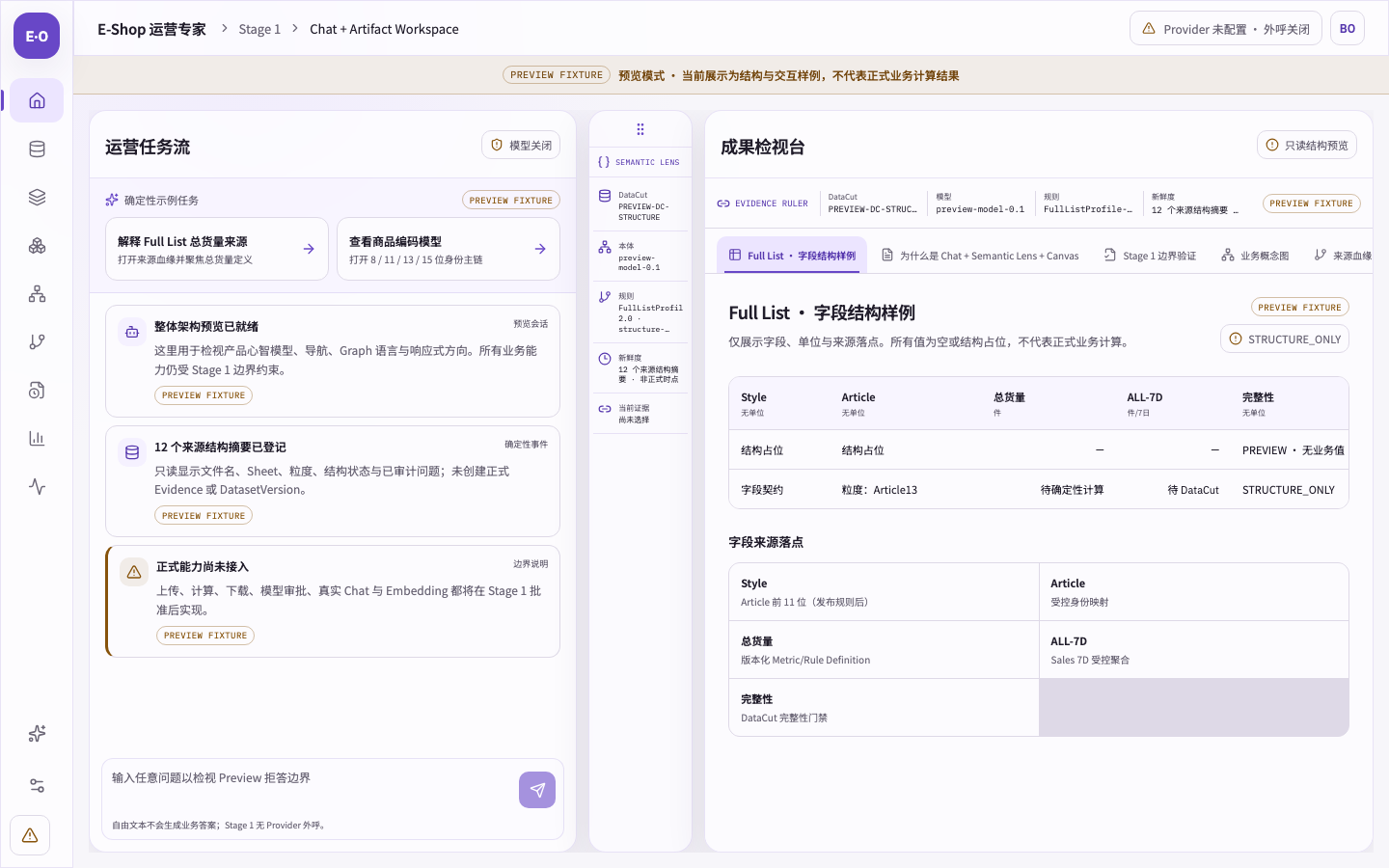
An operations workspace turns multiple source files into reproducible product lists, analysis artifacts and governed business rules.
Inventory, sales, purchases, returns and product data use different granularities, time ranges and definitions. Repeated spreadsheet reconciliation is difficult to reproduce.
Evidence registration, dataset versions, frozen data cuts, product identity, deterministic calculations and human approvals support cited AI analysis and traceable XLSX artifacts.
Multi-source data governance, deterministic calculations, field lineage and AI-assisted analysis share one working environment, addressing the difficulty of aligning e-commerce metrics with the evidence used for decisions.
AI methods
DATA_GOVERNED_DECISION_SUPPORT / SEMANTIC_MODELING / FULL_LIST_ENGINE / EVIDENCE_LINEAGE / AI_AGENT_GOVERNANCE
Workflows, pipelines and agents
Evidence and Source Adapters / DatasetVersion and Frozen DataCut / Product identity mapping and business semantics / Deterministic Full Lists and Artifact Canvas / AI citations, business concept maps and field lineage
Source materials are registered as immutable Evidence and security-checked. Formal jobs read only frozen DataCuts. Data, rules, models, mappings and artifacts retain versions and hashes. AI falls back or declines when evidence, permission or an approved provider is unavailable.
Product and data-governance evidence
From an operations workspace to data lineage and business meaning
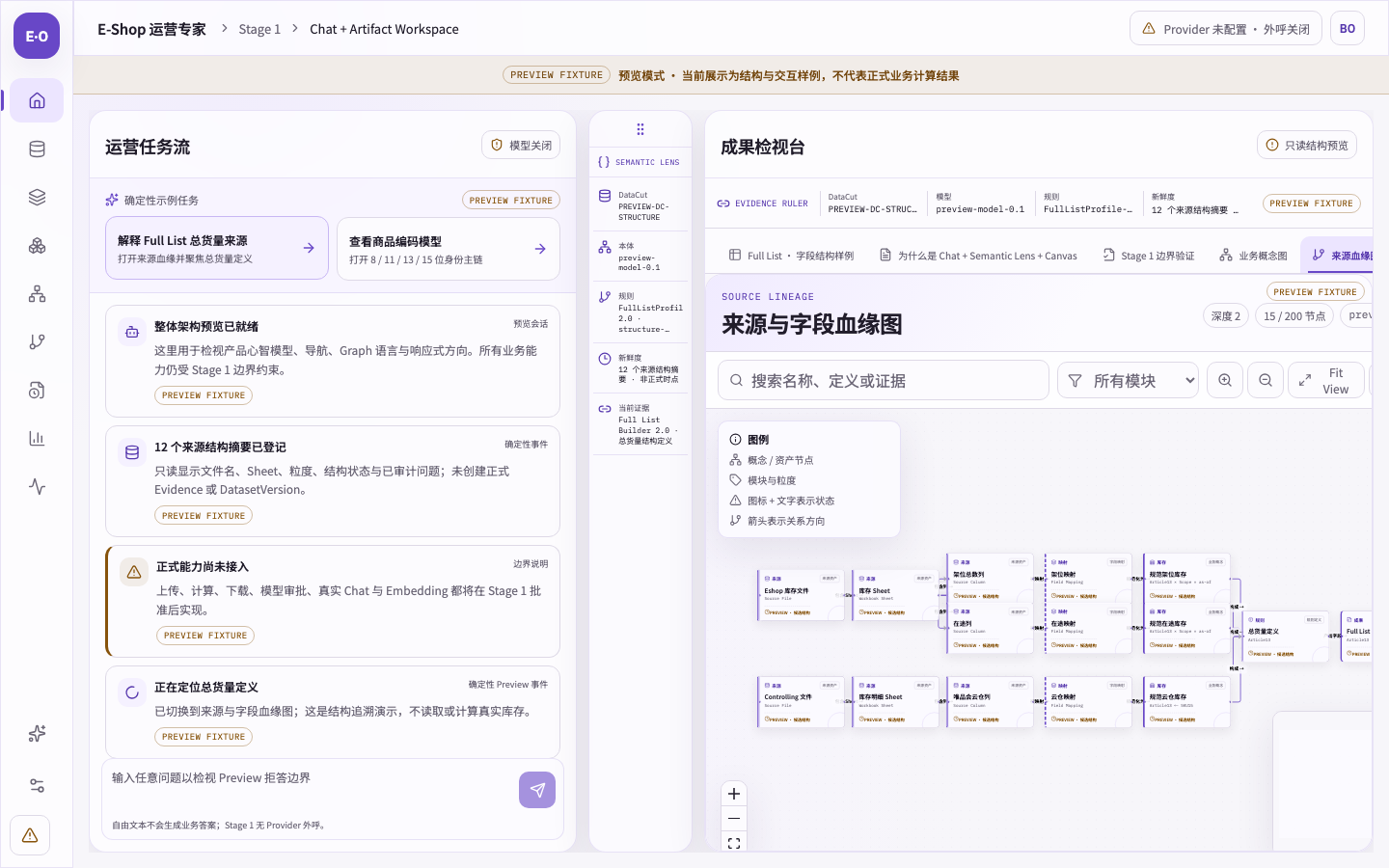
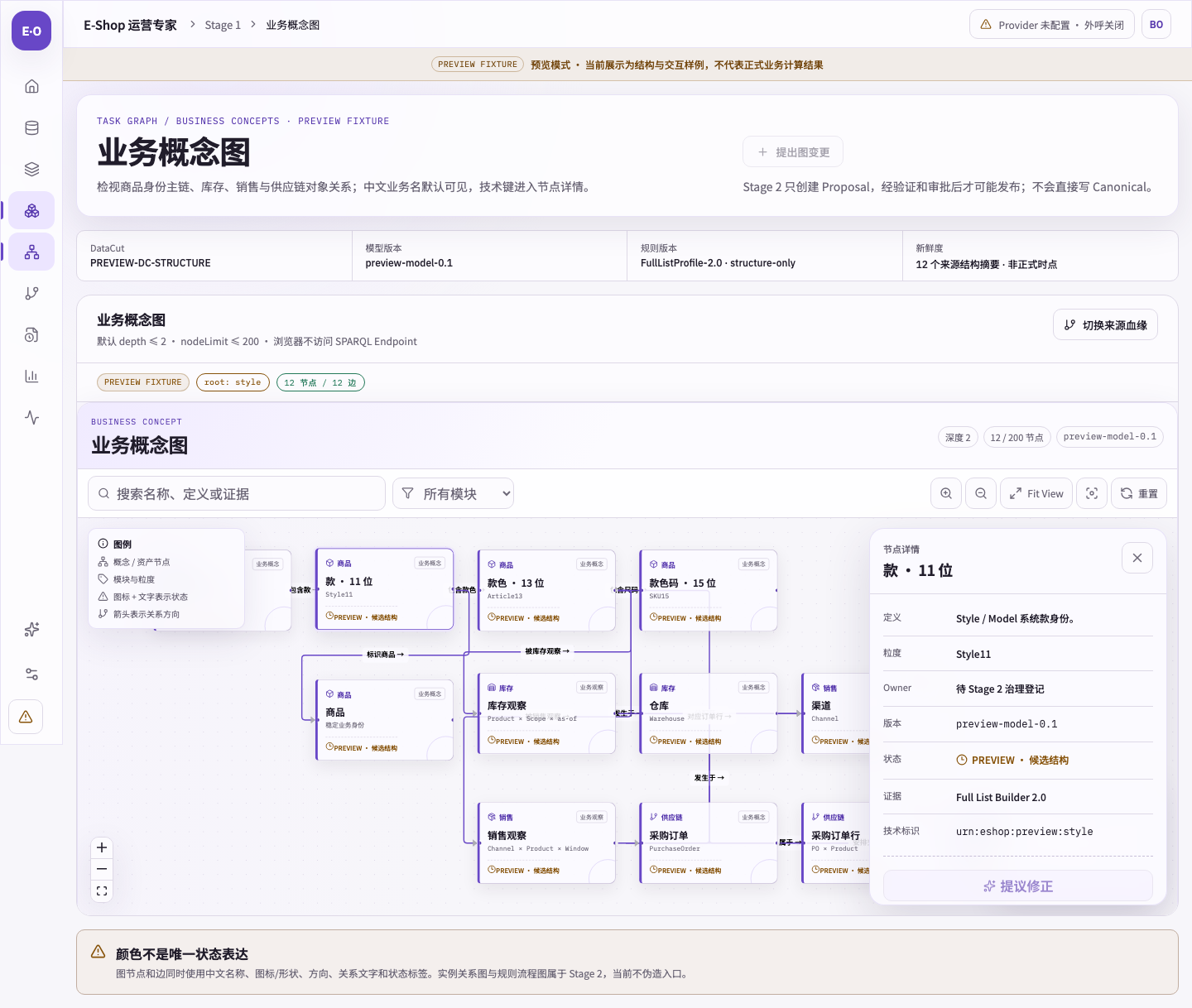
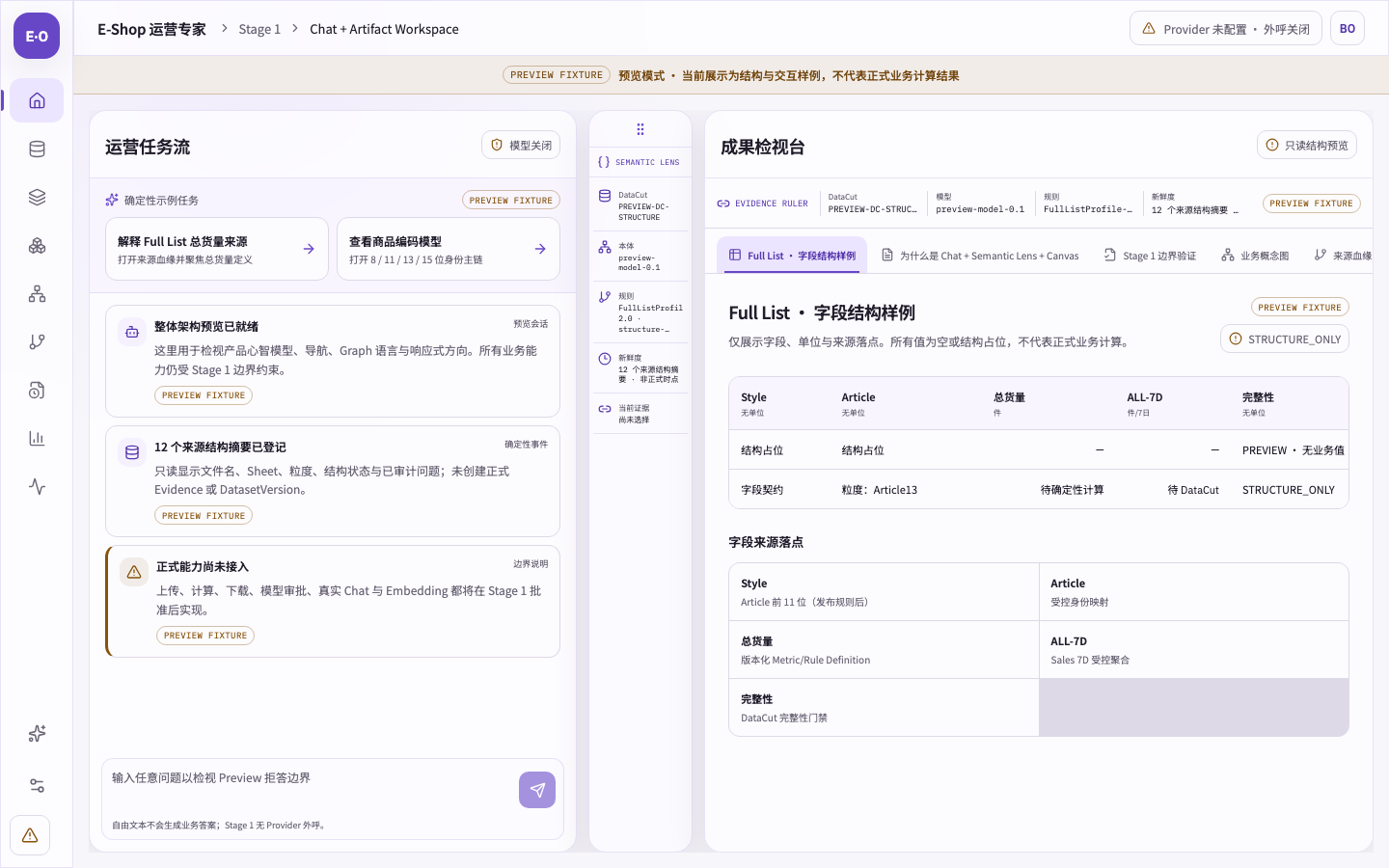
Inputs have evidence, calculations have versions and results have sources. Business changes remain subject to review, providing a foundation for further operational analysis.
This public project account describes documented work and its current stage. It does not imply independent verification, client endorsement or unreported commercial results.